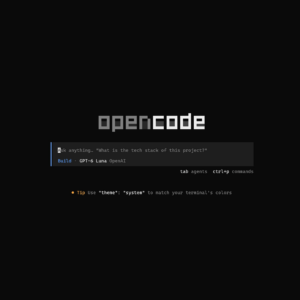
Installing and Configuring OpenCode
Install and configure OpenCode on Windows or Linux with Bun, MCP servers, permissions, watcher exclusions, and reusable skills.
Read the article Installing and Configuring OpenCode Install and configure OpenCode on Windows or Linux with Bun, MCP servers, permissions, watcher exclusions, and reusable skills.
Read the article Installing and Configuring OpenCode
With the Windows Package Manager (winget), it is easy to install software from the command line. This makes your installs scriptable and thus repeatable. This article is the WinGet counterpart to my previous Notes on Chocolatey: it shows how to reproduce a machine’s installation instructions and update your packages regularly. Install WinGet WinGet is supported…
Read the article Notes on winget
Compare deterministic Fisher-Yates and Feistel-based shuffling techniques for selecting every item exactly once per cycle.
Read the article Shuffling: Fisher-Yates vs Feistel
Let’s switch from Chrome to Brave, as it is a more privacy-focused browser and the ad blocker extensions don’t function anymore. I’ll also show how to make Windows start Brave when you type ‘chrome’ into your Run box. And let’s fix those profile icons.
Read the article Swapping Chrome for Brave on Windows
We replaced Redis with Valkey with no production downtime and no application changes, just a few lines of Terraform. Here is why an uneventful infrastructure migration is often the best possible outcome.
Read the article How we switched 150+ stores from Redis to Valkey, and nobody cared!
Make OpenCode easier to use in Windows Terminal by adding a key binding that sends Shift+Enter through the kitty keyboard protocol.
Read the article Add Shift+Enter to OpenCode in Windows Terminal
At Wehkamp Tech Hub, we replaced a physical planning wall with a digital roadmap tool. Here’s how we built a read-only Jira-powered SPA that generates HD slides, visualizes team bottlenecks, and keeps leadership informed – without giving everyone access to Jira.
Read the article When the Planning Wall Doesn’t Scale
Use GitHub’s git-commit skill to make VS Code’s Generate Commit Message button produce consistent Conventional Commit messages.
Read the article Improve VS Code Commit Messages with GitHub’s git-commit skill
Some validations are complex. Let’s explore how .NET data annotation validation and FluentValidation can be combined and (unit) tested.
Read the article Unit Testing complex validations (study)
Ever since I wrote about the “Is One Of” and “Is Not One Of” validation attributes, I’ve wondered if there is anything better for class validation. I mean: validating individual properties is fine, but usually the more interesting stuff is the validation of a combination of members.
Read the article Let’s combine Data Annotation Validation with FluentValidation